Yoga Teacher Burnout: Why Teaching 15 Classes a Week Doesn't Work
Merilin Vrachovska-Gilchrist
· 8 min read
Teaching yoga often starts as a dream coming true.
You’re having this burning desire to teach, to spread the knowledge you’ve learnt, or perhaps to try to help others to feel the amazing benefits of yoga that you’ve gotten to experience. And after having your own devoted practice and doing one (or maybe more) teacher training, you feel ready.
But then you start teaching, and start saying ‘yes’ to every single opportunity there is. Fast forward a few months later, you’re packed and teaching 3 classes per day.
Your voice feels scratchy, your body is achy, the classes feel pretty much on autopilot, and you can’t really remember when was the last time you had your own personal practice.
You still love yoga, but you're just tired and a good night's sleep doesn't fix it anymore. If that sounds familiar, you're very much not the only one.
Teaching too many yoga classes is one of the most common reasons teachers end up exhausted. In this post, we will look into why that happens, and how a more sustainable way of teaching could look like.
Why so many yoga teachers end up teaching 15+ classes a week
There's no big mystery here, it usually comes down to paying the bills. We all have to eat and if you want to devote all of your time and energy to be a yoga teacher, you’ll need to teach a lot.
Most studios pay a flat rate per class (often not a big one, especially when you're new), so the only real way to earn more is to teach more.
Then, on top of teaching, there’s also a lot of unpaid work, that includes the travel between studios, the planning of sequences, creating playlists that fit the energy of the class, staying after the class to chat and answer students and, of course, posting on social media so people turn up.
What yoga teacher burnout looks like
Burnout looks different for every teacher, but it often starts quietly. You feel a bit flat, and the excitement you used to have before class isn't there anymore.
And while you still guide everyone else gently through their practice and wish them a lovely evening, you go home with not much energy left over for you.
Some other signs that teachers run into include:
- Your body feels worn down, even if it's not sore. Demoing the full class 10 or 15 times a week adds up fast, and over the years it can turn into real injuries (knees and shoulders especially).
- Your own practice disappears. Or it turns into lesson planning on the mat.
- Your voice is scratchy and tired, and you're sick of hearing it.
- You forget what you've already said. You start catching yourself wondering "did I already say that?", or going blank on a sequence you've taught many times.
- Small things start to get to you. A student walking in late or the speaker not connecting suddenly feels like a big deal.
- You start dreading classes you used to love.
So how do you know if you're teaching too many yoga classes?
The number where this kicks in is different for everyone.
You can start feeling any of these even after a few classes per week, especially if you’re teaching on top of your regular job, or it can be after teaching 2-3 classes a day for weeks.
The question is less about the number and more about whether your week is built in a way your body and mind can actually keep up with for years.
The real problem: your income depends on you being in the room
When you're burnt out, the advice you get is usually some mix of rest more, drink more water, eat enough, protect your own practice and learn to say no.
And it is good advice, but it doesn't change the main thing behind yoga teacher burnout, which is that you only earn when you're physically in the room teaching.
Every class needs you there, on time and with energy. So if you want to earn more, then you have to teach more. And no amount of water and sleep is going to fix that part.
Another thing worth mentioning is your students. Some people come for the time slot or because the studio is around the corner, sure, but others come for you, specifically.
Perhaps they like your style, your voice, the way you explain things, the bits of philosophy you bring in, maybe even your playlists.
Right now that connection only exists inside the studio. So when you drop a class to get some rest, or change studios, or move to a new city, a lot of the people you spent years building a connection with just stay behind.
Which is one more reason why cutting back feels so hard, even when you badly need to.
How to teach less and still make a living
The teachers who've made it work long term (some of them for 20 or 30 years) mostly do a mix of the things below. While things won’t change overnight, even picking one or two can take a lot of pressure off:
Teach off the mat. When you demo less and cue more, it will change everything for your body and teaching. Clear cueing is what makes a fuller schedule doable for the teachers who do teach 12 or more classes a week.
Stop writing a brand new sequence for every class. You can't (and don’t have to) teach 5, 10 or 15 classes a week with new sequences every time. You can run one theme for a whole month, or use the base of the class to adjust the sequence by changing things from it for each group. Your students won't mind, and chances are, most of them like knowing what's coming.
Fewer classes, more people per class, or better paid sessions. Private clients are often the thing that keeps your teaching going for many years, and workshops, immersions and training are how a lot of teachers get away from doing 20+ classes a week.
Cut the commuting. Running between three studios across town eats hours and energy that nobody pays you for. Teaching most of your classes in one place, so the students come to you, makes a big difference, and mixing in some online classes can do the same thing.
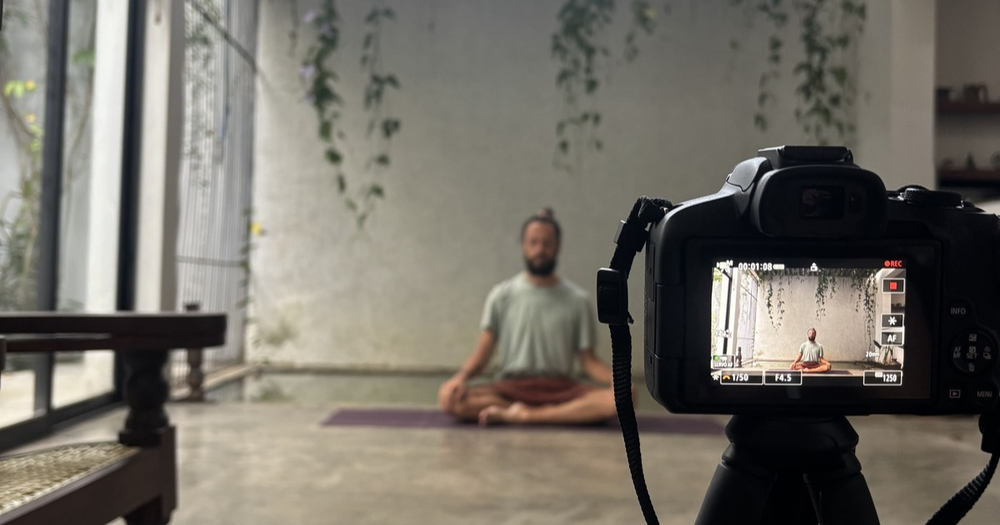
Let one class keep working after you've taught it. A recorded class can be watched by students at home next week, next month, or next year. It won't replace your live classes and it shouldn't, but it's one of the only ways to earn from your teaching without your body having to be there every time. And you really don't need fancy equipment, a phone and some daylight is enough to start.
Build a group of students who follow you. When students come for you, you can move studios, change your schedule, run a workshop or put out a course, and they'll actually come along.
Where Happy Yogi fits in
This is the exact problem we built Happy Yogi for. It's a yoga community app made for independent teachers first, so the focus is on helping you build something that works for you.
Here's what you can do on it right now:
- Create your own teacher profile. One place where students find you, your style, your story and where you teach, so they follow you.
- Share your video classes. Upload the classes you record at home so your students can practise with you between live sessions (and new people can find you too).
- List your in-person and online sessions. All your classes in one spot, even if you teach at four different studios and do a Zoom class on Sundays.
- Post updates. Let your students know about a new workshop, a schedule change or a retreat, without it getting buried in the Instagram algorithm.
We're also working on paid classes, courses and memberships, so students will be able to support the teachers they love directly. And right now Happy Yogi is free for everyone while we grow.
That's really the whole idea behind it. Right now so much of a teacher's income depends on how many hours they can physically teach, and we'd love to help change that a little, by making it easy for students to stick with and support their favourite teachers, wherever those teachers happen to be teaching.
What a more sustainable week could look like
Every teacher's situation is different (where you live, what you teach, whether you have another job). So this is not an exact formula, but a rough example to show the two side by side.
| The burnout week | A more sustainable week | |
|---|---|---|
| Group classes | 15, at three different studios | 5-6, mostly in one or two places |
| Classes per day | often 3, an early morning and a late evening | No more than 2, and no early plus late on the same day |
| How you teach | Demoing most of every class | On and off the mat, cueing and walking around |
| Planning | A new sequence for almost every class | One sequence tweaked for each group |
| Private clients | None | 1-2 regulars |
| Recorded classes | None | 1 new class a week, slowly building a library your students can practise with any time |
| Commuting | Hours a week, unpaid | One trip a day, to the same one or two places |
| Your own practice | Skipped | Protected, at least 3 or 4 times a week |
| Days off | Maybe half a day | One full rest day, plus one day without classes that you use for planning and recording |
The second week has fewer hours in the studio, but it allows you to focus on better paid private classes and on recording videos.
If you do that regularly you'll slowly build a library of online videos and even courses, which can keep paying you back over time, and make both your own practice and your teaching more sustainable.
Small steps you can take this week
You don't have to rebuild your whole schedule at once, and honestly you probably shouldn't (that's its own kind of stress). Here are a few small things you can start with to avoid yoga teacher burnout:
- Teach one class this week with cueing and walking around more. Just one, and see how it feels.
- Pick one sequence and reuse it for all your classes this week, adjusting it for each group as you go.
- Record one class at home on your phone. It doesn't need to be perfect, your students already like the way you teach.
- Create your free Happy Yogi profile, add your schedule and upload that class.
- Send the link to your regular students so they know where to find you, whatever studio you end up teaching at next year.
- Pick one day a week with no classes at all, and do your own practice instead. Do it as slow, as simple, as whatever you need it to be.
FAQs
How many yoga classes a week should I teach?
There isn't one number that works for everyone, but from what teachers share, around 10 group classes a week is where a lot of people start to struggle, especially if they demo most of them. A week with 5 or 6 group classes and a couple of private clients is much easier to keep up for years.
Can you make a living teaching yoga without burning out?
You can, but usually not from group classes alone. Teachers who last tend to mix fewer group classes with private clients, workshops and recorded classes, so their income doesn't depend only on how many hours they're in a studio.
How does having your own students help with yoga teacher burnout?
It allows teachers to create a loyal community that follows them regardless of studio location or schedule changes. This connection enables teachers to reduce the number of classes they teach while maintaining income through workshops, private sessions, online classes, and courses.
Can Happy Yogi help teachers who teach at multiple studios and online platforms?
Yes, Happy Yogi allows teachers to list all their classes, whether in-person at different studios or online sessions like Zoom, in one place. This makes it easier for students to find and follow the teacher regardless of where or how the class is delivered.
Final words
Teaching yoga should be something you can keep doing for a long time, and not something that slowly wears you out until you don't want to do it anymore.
If you want to start building a teaching life that belongs a bit more to you, join Happy Yogi for free. We'd love to have you there.
Are you a teacher who's been through burnout, or found a way to make a full schedule work? We'd really like to hear what helped you.